
Alongside gathering feedback online, up to 120 members of the public selected by a ‘civic lottery’ will be convened to provide insight on public service use cases and operational specifications
After launching a major public consultation on plans for a new state-issued digital identity, ministers have claimed that the technology will be the cornerstone of a future model of “government-by-app”.
The public feedback exercise will be “an in-depth process going beyond typical government consultations”, according to the Cabinet Office. In addition to an eight-week window in which citizens can submit views online, government will also convene a “People’s Panel… bringing together people across the country from different backgrounds” to provide insight on digital ID proposals. The panel will be comprised of up to 120 people who will be selected via a “civic lottery”. Their work will commence shortly after the online consultation has concluded on 5 May.
Over the next two months meanwhile, the consultation will seek input on issues including: which public services could incorporate digital identity; what personal information should be included in the virtual document; at what age people should become eligible to obtain an ID; and how best to ensure the technology is accessible to everyone.
Alongside the consultation launch, the government is also releasing images and video of a “working prototype of the system showing how people could log on to a single app and prove who they are”.
Following the launch last year of the first-ever cross-department GOV.UK App, the digital ID will support a future model of “government by app [that] will be as easy and secure as online banking, and will be available to those who want it”, according to the Cabinet Office.
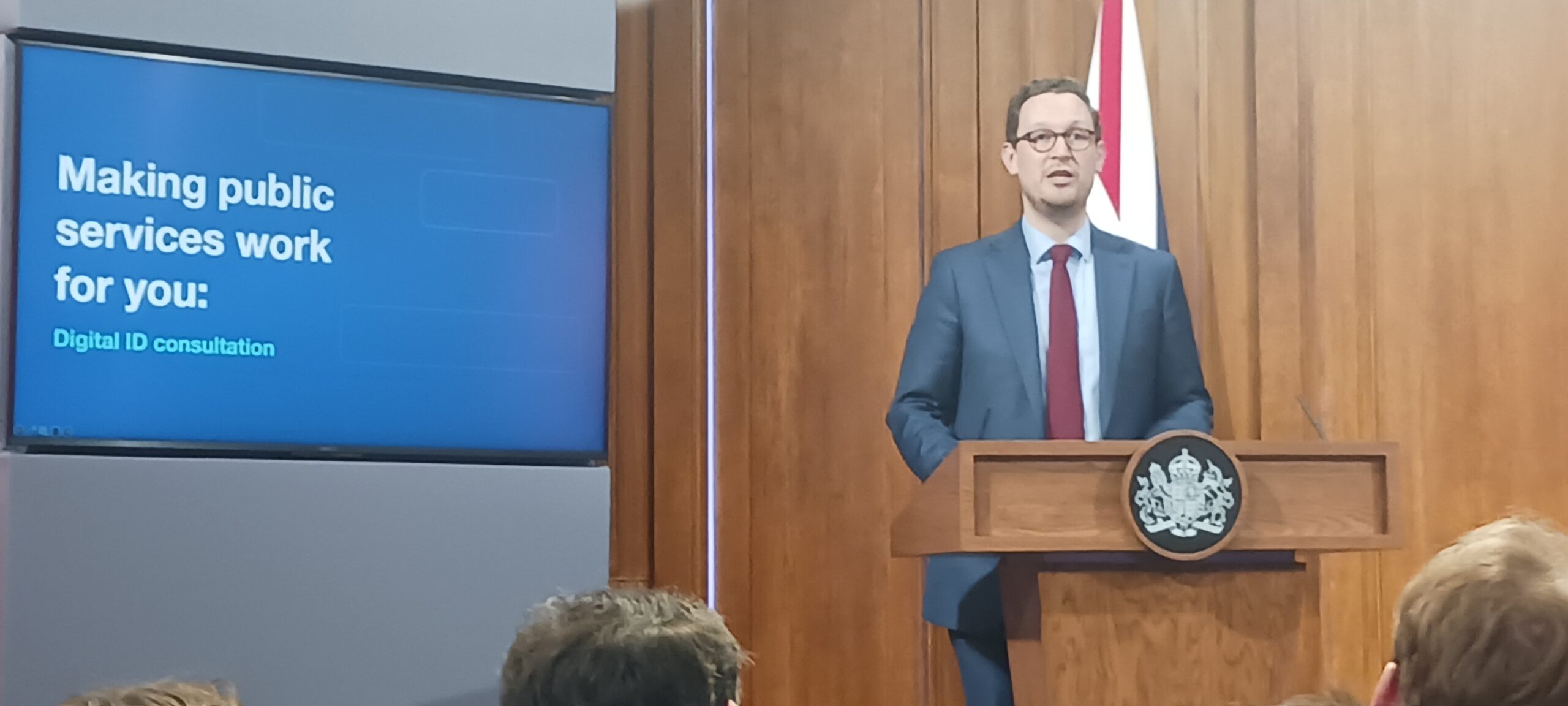
Darren Jones, chief secretary to the prime minister, added: “People too often dread their interactions with public services. Endless telephone calls, complicated printed forms and having to tell your story multiple times to different parts of government. I want to change that and make public services work for you. The new digital ID will make that possible, allowing you to log on and prove who you are to access public services more quickly, easily and securely. Supermarkets, banks and shops have all chosen to move their services online because it delivers a better customer experience and value for money, and other countries like Estonia fully digitised public services years ago. We need to catch up. We’re launching a public consultation to let you have your say about how we use digital ID to make public services work for you. We want to build a system that works for everyone. Now is your chance.”
Related content
- ‘You can’t have announced this thing without having any idea of what it will cost?’ – MPs hold minister’s feet to the fire over digital ID plans
- Identity politics: What do we know so far about government’s digital ID plans?
- Digital ID minister replaced with former musician and comms advisor James Frith
Since it was first unveiled by prime minister Keir Starmer in September, the plan for a government-led digital identity has been subject to much scrutiny and criticism. It was originally intended that, by 2029, anyone undergoing a Home Office Right to Work check would require the new digital ID in order to do so.
But, in January, it was announced that, while the checking process will be digitised, employees will still be able to complete the procedure – which is a legal requirement before starting a new job – by using physical or virtual copies of existing official documents, such as a passport or visa.
In the past six months, ministers have also frequently claimed that the answers to many questions about the new identity regime – including the cost of delivering it – cannot be answered until after the consultation process has been completed.
In projections made late last year, the Office for Budget Responsibility said that “the implementation of digital ID cards is provisionally forecast to cost £1.8bn in total over the next three years”. This was described by the OBR as “unfunded cost”, for which “no specific funding has been identified” as yet.
However, then-Cabinet Office minister Josh Simons said at the time that that the figure cited by the fiscal watchdog “was an initial, and early, estimate… [and] we do not recognise it as an accurate cost of the programme”.
“Any costs in this spending review period will be met within existing settlements,” he added.