A Downing Street event this week marked the start of a key stage in the government’s plans for a new formal digital identity. PublicTechnology went along to find out more.
Since being announced by prime minister Keir Starmer six months ago, a lot has been said about government’s digital identity plans
One thing that has been said quite a bit is, essentially: wait and see.
According to ministers, that waiting – for answers to questions about the technology’s cost, design, and uses – can only end once government has had a chance to engage with citizens via a public consultation process.
A process which, as of this week, has now begun.
As well as an eight-week window in which citizens can give their views by completing a standard online feedback exercise, a specially convened People’s Panel – of up to 120 randomly selected citizens – will be asked to contribute their views on digital ID.
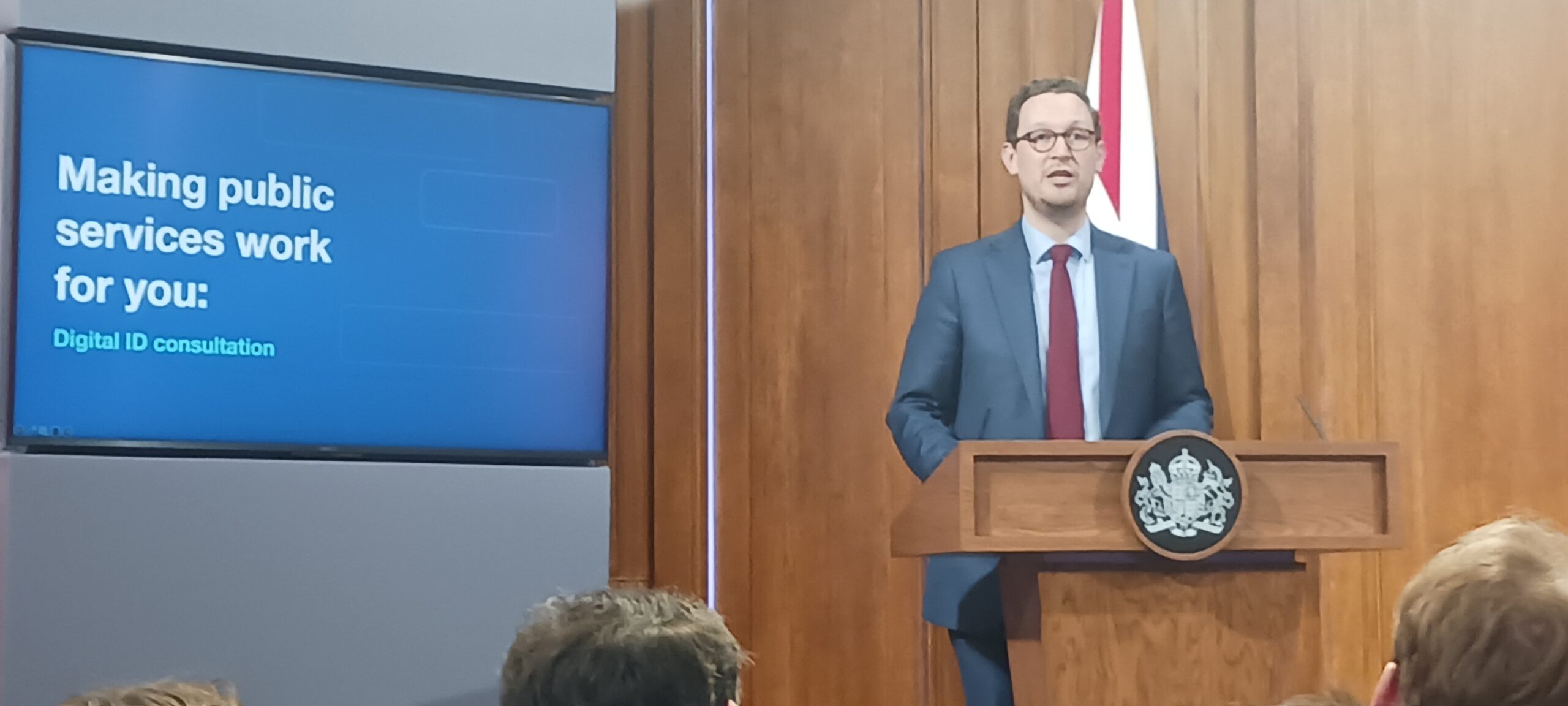
At a Downing Street event launching the consultation, chief secretary to the prime minister Darren Jones (pictured above) told PublicTechnology and other reporters that new forms of identity are key to his administration’s vision of “government-by-app”.
“The government will build a truly modern Britain where public services work for you when you need them – new digital public services that will be there at the most important points of your life,” he said. “But, first, we need to build the foundations for these new, modern public services. And that is exactly what digital ID is for.”
Which answers one question, at least. And, while the wait for others may continue, the start of the next step on government’s journey towards digital identity has provided more information and insight on what the road ahead looks like.

Is the People’s Panel ‘a gamble?’
Jones, who also serves as the top minister in the Cabinet Office, said the plan for the dedicated advisory panel of citizens had been hatched because “given the level of national interest, [we] decided that we should do this consultation differently, and do our politics a little bit differently”.

He explained that participants “will be selected scientifically by the company we’re working with – to make sure they’re a representative sample of different ages and demographics and backgrounds, and [also in terms of] their views of this programme already, and where they come from across the country”.
He added: “The People’s panel is a gamble on my part, right? Because I’m saying: ‘Hey, we should get 100 people together from across the country and talk about [digital identity], and they get to vote at the end of it to decide whether they like it or not – or what conditions they [recommend to] put around it’. And I’ve made it a legal part of the government’s consultation. That’s never been done before – because, in many ways, you’re giving up control of… the process. Actually, I think that’s really important. Because the conversations we’ll have with the People’s Panel and… the process they will go through is a story that we want to tell to the public as well. So, it’s not just ministers and officials looking at what you’ve typed in on the website and deciding what we think about it; actually, it is a much deeper and more extensive conversation with the sample of the public.”

What’s it called, what will it look like – and who will build it?
Some of the most basic questions about the new identity will, it seems, remain unanswered for now.
Jones told reporters that – even in its prototype form, a video of which is now available for public viewing – government has not yet provided a proper representation of what the ID will look like, nor given it a name, even as a placeholder.
These important issues will only be settled once the public has had its chance to provide input, and more details are known of how and where the new virtual credential be used by government.
“We haven’t actually included what the digital ID will look like yet, as that will be decided based on feedback from the consultation,” he said. “And we’ve also not branded it or given it a name, because we want it to reflect the use cases that we define by the consultation and the People’s Panel.”
But one “big question” can already be answered, according to the minister: “who is going to build this?”.
“The answer is: we are,” he said. “This system is a piece of sovereign technology capability, and the responsibility for the design, build and running of it will be within government, with the support of the Government Digital Service. It will not be outsourced to a private company.”

Data minimisation – to begin with
In his presentation to the press, Jones reiterated that government’s “baseline is to start with as little data as possible – enough simply to prove who you are and nothing more”.
However, if the collection and use of additional information could prove useful in delivering new services, this could be offered going forward.
“If more is needed to support other services in the future – for example, by looking at address information – we will, of course, explore that with the public.”
At this point Jones displayed the prototype that demonstrated government’s vision for “a future of ‘government-by-app’ underpinned by digital ID”.
“The digital ID system could start by helping you complete simple administrative tasks like proving your right to work digitally when you start a job,” he said. “But… the app could evolve to become a one-stop shop for accessing public services with your digital ID, doing the work for you joining up these services so you don’t have to do it yourself.”
GOV.UK One Login – a unified sign-in and identity-verification tool through which citizens will be able to access services across departments – provides a single front-end for users. But it is understood that government intends that, underneath this, the digital ID system will enable data to be shared across services and organisations – for those who are happy for the state to take the lead in managing its relationship with citizens.
But while the identity system will provide the means of linking information, data itself will remain in situ.
“Data relating to the digital ID will always be stored in line with standard government practice, just like how your passport or national insurance data is stored today,” Jones said. “There will also not be one new single central database of all of this information in the centre of government: it will remain situated where it is. For instance, data about your benefits entitlement will stay with the Department for Work and Pensions. Your driving data will stay with DVLA, your tax data with HMRC. The difference here is that – with your digital ID, and by being able to prove who you are – we can bring all of that information together in one place for you.”

NHS services to remain apart
There is one significant exception: NHS services, and data, which will remain entirely within the purview of the existing health-service app, and will not interact with the digital ID in the foreseeable future.
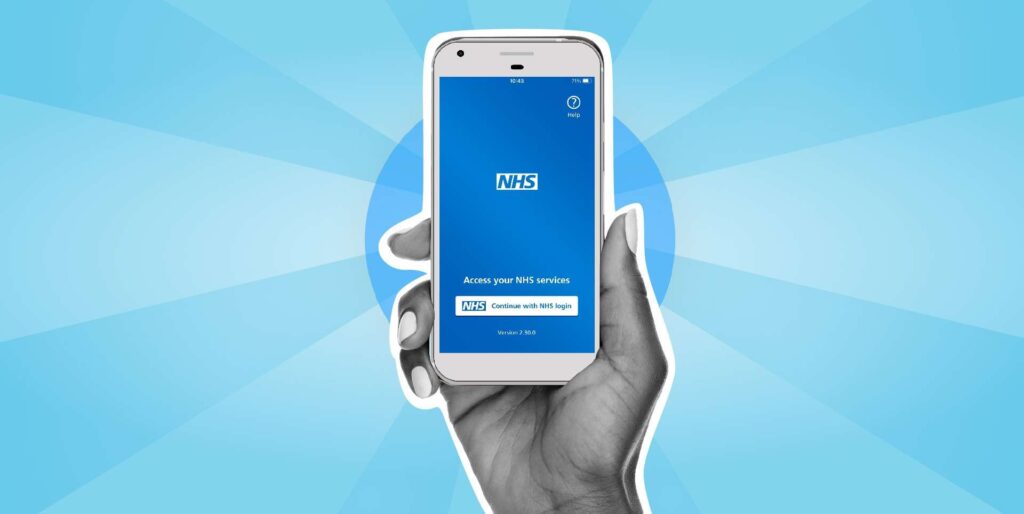
“The main exclusion that we’ve made… is that NHS App data will be separate,” Jones explained. “That’s because the NHS App is already pretty well developed – we spend a lot of money on it, and it works reasonably well. We don’t want to slow down the development of the NHS App by… aligning it to the starting position we’re in now with digital ID.”
He added: “Also, people rightly want their health data treated differently to [that related to] their tax disc for their car – which is understandable. Otherwise, all other government services have the potential, where there’s a customer-facing interaction, to come into the [GOV.UK] App.”

Levelling up with the consumer sector…
Jones said that plans for the GOV.UK App – underpinned by the digital identity – are intended to ensure that the UK government offers a customer experience comparable to the best services run by not only other leading digital nations, but also to the best of the commercial world.
“Like your banking app, you [will] start by using your mobile device and face ID to open the app,” he said. “On the home screen, you’ll see handy reminders about what you need to do or tasks that you need to complete. For example… telling you that you need to get your vehicle tax payment sorted soon. And, instead of having to then go to a different website and fill in a different form, you can just click a button and pay for it then and there. Quicker, easier, simpler. And, if you have a child, for example, you’ll be able to see whether you qualify for free childcare hours here in the app without having to look at a whole number of websites, as is currently the case. You could also manage local services by telling the app which council [area] you live in. You could even remind yourself on what day your bins are being collected – the most searched-for term on local-authority websites.”
The minister added: “We cannot continue on this two-track process where services in the private sector and banking and shopping and all the other things that we do in our day-to-day lives are fast, easy and digital – and then, when you come to the public sector, they’re slow, clunky and disjointed. Modernisation, through the use of technology, is the only viable path to modern public services that are both affordable to the taxpayer and there when you need them most.”

…and levelling the playing field for service users who aren’t ‘annoying’
A world in which citizens can use digital platforms to access government services and information at any time of their choosing is one that will be much more egalitarian, Jones claimed.
He explained that, in a system where being provided with public services may requires phone calls, letters, and queueing for appointments, there is an advantage for “those with the resources, the time, the connections, the confidence – and perhaps even sometimes the pushiness – to navigate what often feels like a labyrinth”.
Meanwhile those who are occupied with work or caring responsibilities – well as those who do not impose themselves as much as others – can miss out, he said.
“People often end up getting to the front of the queue because they [are] being a bit annoying. And, so, if you’ve got the time to ring and ring and ring and say: ‘Where is the answer? Where am I in the process?’, you do get treated differently to the person who doesn’t have the time to do that. And that’s just inherently unfair, because it means you’re not prioritisng people in a fair way in terms of their need for support.”
Jones added: “The whole point [of a digital system] is that it should be easy, simple and accessible to everybody. So, if you are caring for people, if you work long shifts, [or if] you don’t have the means to continually challenge the system for the outcome, [digital] makes it easier for everybody. Which lifts everybody up and means that [other] people don’t need to spend the time hassling the government departments and services that they may have to today to get an answer.”

Leaving ‘the big prize for the next government’
Between now and the time of the next general election, government can begin laying some of the building blocks for the new and modern system described by Jones.
But construction will continue beyond 2029 – and, regardless of who is in Downing Street at that point, it is then that the biggest benefits will be realised, the minister claimed.

“We’re going to have to spend the next year consulting on this and legislating for it,” he said. “You then start building it in 2027, and there’ll be some simple things that will come forward by the end of this parliament – maybe tax discs, some administrative tasks, and the Right to Work check will be available [via digital ID], if you want to use it, from 2029.”
Jones added: “But the big prize – [including] things like the childcare system, your pension statement or HMRC data – that’s really a prize for the next parliament. Because we’re going to have to take some time to get it up and running in the first place.”
The minister stressed that, to claim this prize, the next administration would need to undertake the correct legislative groundwork, and that laws passed by the current government will not provide carte blanche for future regimes to expand the use of digital identity without constraint.
“It will all be governed by legislation,” he said. “We’ll introduce a bill later this year, but I expect to build in a mechanism that means that [this] government – and any future government – will have to go back to parliament for a check-and-balance and approval for each service that comes onto the app in the future. So, there’ll be a continuing conversation and democratic accountability with parliament as the app is developed in the years ahead.”