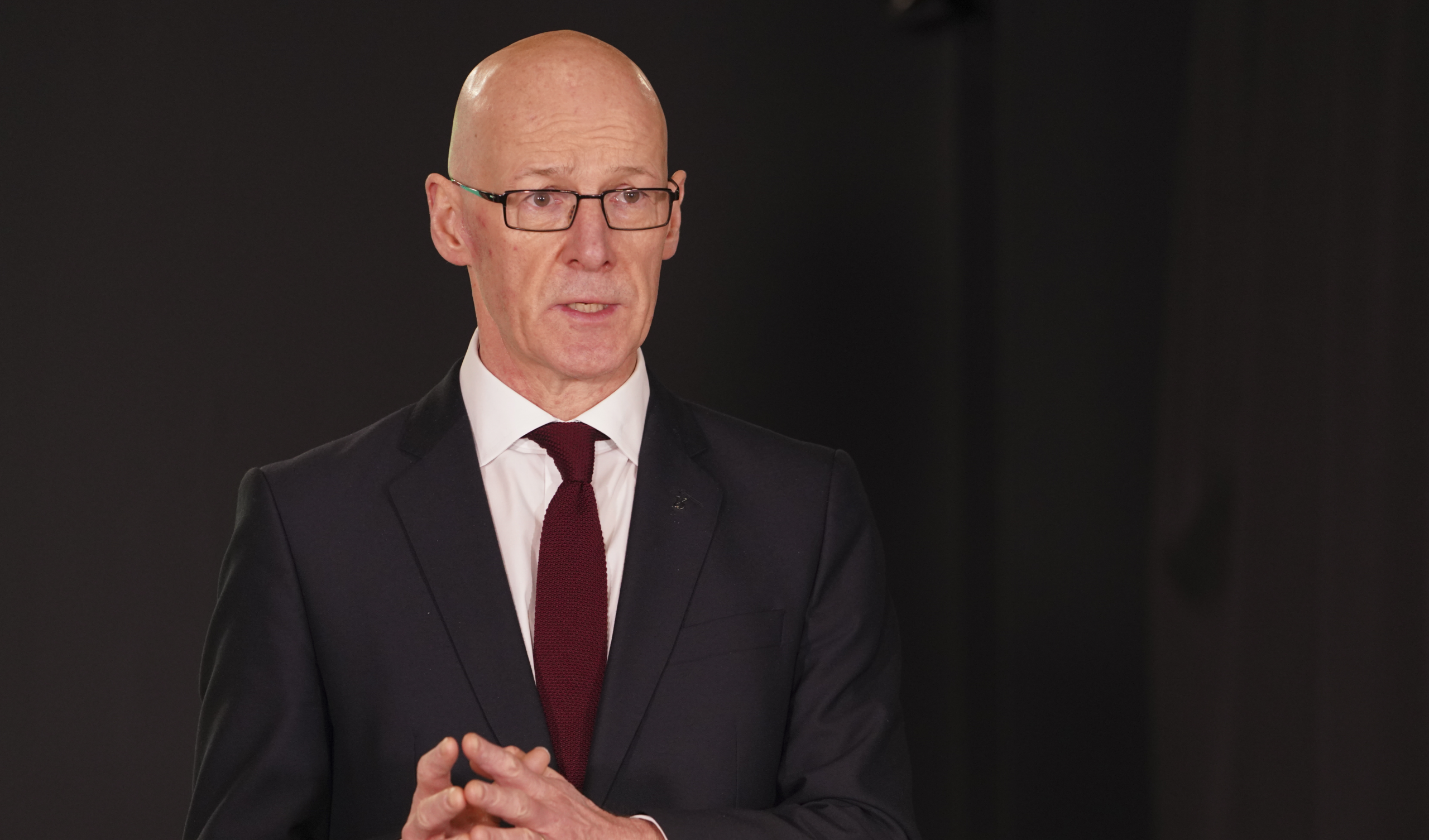

Giving evidence to MPs, the tax agency’s head has claimed that the adoption of new technology will ‘augment our agent experience and improve outcomes’ but will not slash overall numbers
HM Revenue and Customs permanent secretary John-Paul Marks has told MPs that he does not expect increased use of artificial intelligence to lead to headcount reductions at the department over the coming years.

Marks’s comments came at a session of parliament’s Treasury Select Committee last week, when the perm sec was asked about HMRC’s use of technology and recruitment plans.
He told MPs that he expects HMRC to be “broadly the same size in 2030 as we are today”, with AI increasingly deployed to assist the work of officials rather than to replace them, while some staff will be retrained.
In July last year, the Cabinet Office’s annual statistics for the civil service showed HMRC was the third largest department in government, trailing only the Department for Work and Pensions and the Ministry of Justice.
According to its most recent transparency data, HMRC had a full-time-equivalent headcount of 66,952 – including non-payroll staff – in November. The Valuation Office Agency, which is being merged into HMRC from April, had a further 4,313 FTEs.
Speaking to the Treasury Committee last week, HMRC perm sec Marks said AI is already embedded into the department’s risking tools and data to enable the organisation to target compliance risks effectively.
Related content
- HMRC Transformation Roadmap: New citizen services, more revenue and ‘cultural change’ across department
- HMRC AI and tech to support plan to collect extra £500m tax from most wealthy
- HMRC expands AI use to narrow revenue gap and ‘identify nascent issues with tax system’
“We think that we can use AI to augment our agent experience and improve outcomes,” he said. “The example which we’ve been testing at the moment is around telephony summarisation. As I am taking the call, the system is summarising for me what the call outcome was and the next best step. So, it’s still led by the agent, but augmented by AI.”
Marks said that while AI offered potential for savings, there is no projected downturn in HMRC headcount over the coming five years.
“As an organisation overall, we [will be] broadly the same size in 2030 as we are today,” he said. “So, we onboard a lot into our front line for compliance and debt. A bit more now for customs and valuation. At the same time, we have quite stretching efficiency targets to reduce the size of our core operation to balance the books. So, there will be both on-boarding of new resources and retraining of capacity within the organisation.”
Marks added: “Of course, AI offers efficiency, but for those colleagues working in the organisation, we think it augments their experience rather than replaces them.”
As part of last year’s Spending Review, HMRC agreed to cut its administration costs by 17% by 2029-30. It also agreed to deliver overall resource-spending efficiencies of 13.1% by 2028-29 as part of the multi-year settlement.
The Institute for Government think tank recently predicted that the over-arching efficiencies targets that Whitehall departments have signed up to could require 40,000 job cuts.