
As tradition dictates, the changing of the last digit in the date provides an opportunity for PublicTechnology editor Sam Trendall to pontificate on what the next 12 months might bring
For those of us of a certain age, ‘2025’ will always sound impossibly futuristic.
And, as of yesterday, we’ve now reached a point where 2025 is in the past. So, we must really be living in a modern high-tech wonderland now – right? Right?
Well, kind of. We begin 2026 in a country where parts of our national infrastructure have changed little from their construction in the century before last. But we also live in a world in which we all have at our fingertips the ability to near-instantaneously create a video of, say, Dame Edna Everage playing tennis with Lennox Lewis.
Swings and roundabouts.
The public sector, as it often does, spans the breadth of this uneven landscape. In some parts of the state you will find computing systems that have lived longer than any of their users, while in others there are the most sophisticated automation and artificial intelligence tools powering operations and citizen services.
As we progress into a future beyond the faraway time that was 2025, here are some of the other things PublicTechnology expects to find in its reporting this year

Digital identity
Where else could we begin? Since the prime minister announced plans in September for a new national digital identity system, the story has already come to dominate our news coverage.
People already have plenty of questions about the plans – concerning the extent of the planned regime, the implication for all of the UK and its territories, where data will be housed and, in particular, the costs of the programme.
Only some of these enquiries have yet been addressed – and arriving at the answers for others seems sure to be a fraught process.
Ministers clearly face ideological opposition to the plans from at least a decent chunk of the public – and from what seems to be a comprehensive array of the Labour’s political opponents.
But, increasingly, there is also some pushback from the checks and balances of its own government, particularly when it comes to how much taxpayer money will be required to support the initiative – and where it will come from.
PublicTechnology will be keeping a close eye on developments during a year in which digital ID will surely be the identifying feature.
Cold war to heat up?
One of our most intriguing little stories of 2025 came during the year’s closing days, when we reported that, for its recent press releases issued on GOV.UK, MI6 had begun providing an accompanying Russian-language version.
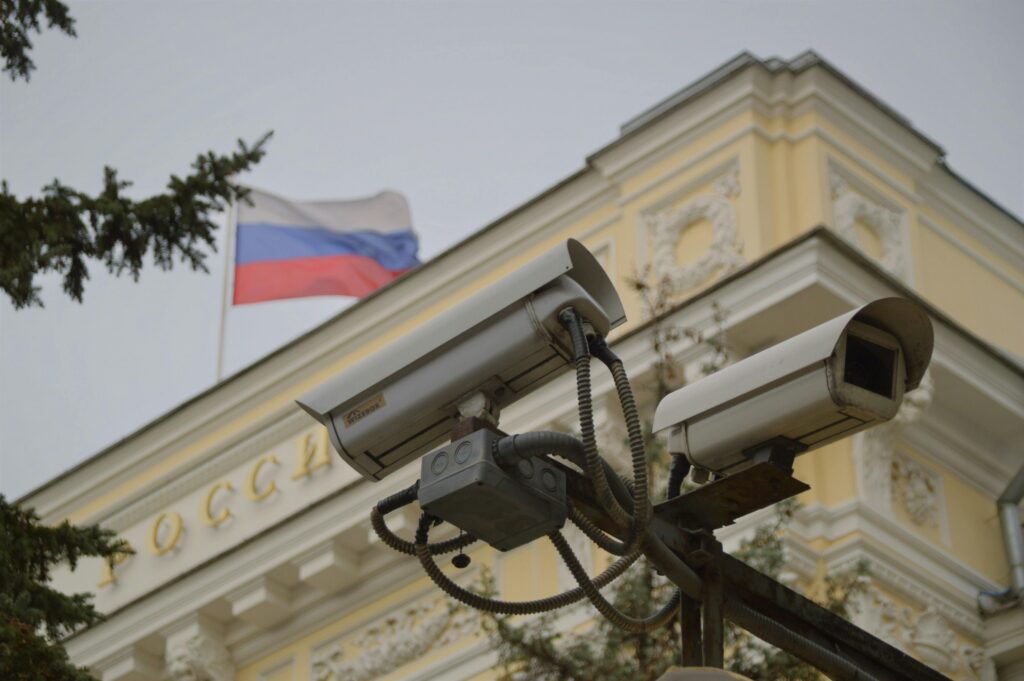
Among the online translations were announcements concerning the first public speech made by new MI6 head Blaise Metreweli, in which she talked about how “Russia is testing us in the grey zone with… their attempts to bully, fearmonger and manipulate”. She also opined that the “defining challenge of the twenty-first century is not simply who wields the most powerful technologies, but who guides them with the greatest wisdom”.
Her remarks came just a few weeks after the overseas intelligence service announced the creation of Silent Courier, a new dark web portal created “so MI6 can recruit new spies for the UK – in Russia and around the world”, according to foreign secretary Yvette Cooper.
The key role of technology, and the overt references to Vladimir Putin and his regime, are hallmarks of what some are already referring to as a new cold war.
While the first one was often marked by high-profile flashpoints – such as building bombs or spaceships, or propagandising through elite sport – the current climate is invariably much more insidious. This second cold war is chararcterised by information warfare, shadowy cyberattacks, and even freelance IT support workers deployed by hostile states.
All of which has left us in “a space between peace and war”, according to Metreweli.
We may not always be able to tell whether – or even whom – we are fighting. But we can be sure that we now live on a battlefield. This year, and many beyond, will likely bring with it some heated skirmishes.

Judgement day for AI?
Well, we were never going to leave it out were we? But, rather than focus on the latest models or the newest use cases, perhaps this will be the year when the public – and PublicTechnology – starts taking a closer look at where, and whether, artificial intelligence works. And where it does not.
Throughout 2025, government’s relationship with AI was one of enthusiasm and experimentation. But the technology is now becoming embedded in some critical citizen services, covering benefits, criminal justice and border security.
Such deployments will only grow in scale, sophistication and significance and it is to be expected that public discourse around AI will also become more serious. Many conversations thus far have concerned issues of culture and copyright – which, to be clear, are also of huge importance.
But it is a different matter entirely if our public services, and the government that delivers them, is run on AI and automation.
Once again, there will be more uncomfortable – even existential – questions for government. And, for once, AI may not be able to answer.

Whose cloud is it anyway?
Cloud computing is another technology that once was new and novel but now is not just part of the state but, in many senses, is the state.
How much of government’s data and systems now lives in a server owned by a public cloud company? And how often does that company happen to be Amazon Web Services?
Last year was something of a perfect storm for those who harbour concerns about the government’s reliance on few massive tech providers, as well as about the dominance of two such firms – AWS and Microsoft – in the increasingly ubiquitous public cloud sector.
Both of the big two were hit by outages towards the end of a year in which they were also the subject of a regulatory report that concluded that they “hold significant unilateral market power… [and] this harms competition in cloud services in the UK”.
The Competition and Markets Authority proposed launching “measures aimed at AWS and Microsoft [to] address market-wide concerns”.
There are also signs that the smaller players in the market are seeking strength in numbers and are looking to fight back in the battle for both procurements and public opinion.
Ten to fifteen years ago, there was fierce debate over whether public bodies could trust the cloud. Going forward, the consideration will be more about whose cloud can be trusted – and, perhaps more importantly, whose cannot?

All eyes on GDS
Whatever it has been up to at the time, across its lifespan and throughout its various iterations, the Government Digital Service is generally close to the heart of what we do on PublicTechnology.
But, even in that context, next year will be a big one for GDS, and for our coverage of it. For starters, 2026 will be the unit’s first full year in its new and expanded form, and in its new home of the Department for Science, Innovation and Technology.

It is also under a new leadership model, with DSIT’s permanent secretary Emran Mian serving as GDS’s head and the de facto chief digital officer for government – a previously discrete role that will not be refilled.
The very early days of the year are also expected to bring the publication by GDS of a new roadmap – “alongside a series of other key digital and data announcements” – for the implementation of technology initiatives across government over the coming years. The strategy document will also include “fully costed, feasible and funded deliverables”, according to recent correspondence from Mian.
However feasible, however rigorously funded, and however deliverable the plans are, they were certainly be scrutinised carefully. By government, by the public – and by us.