
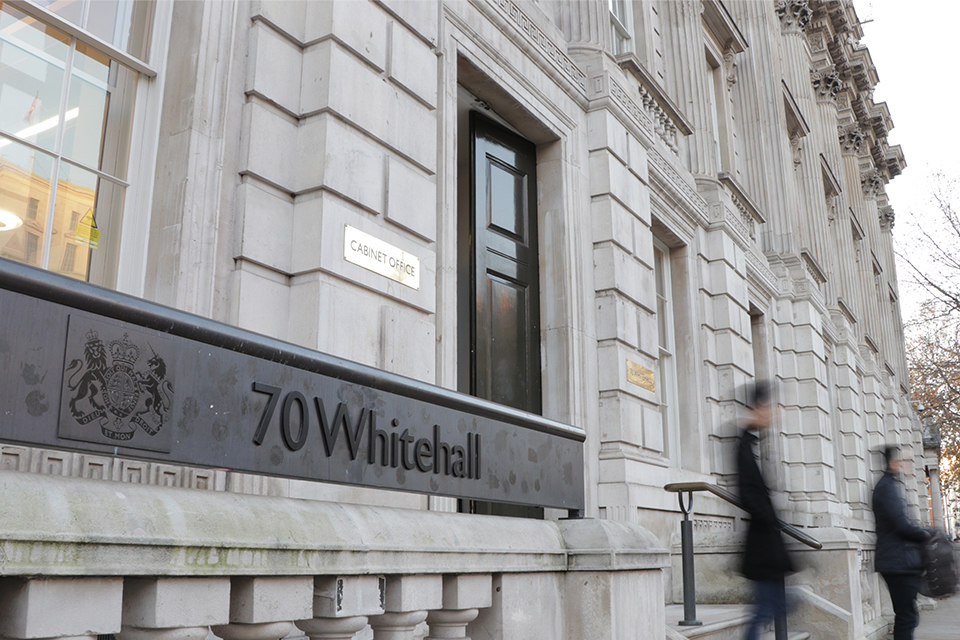
Working with DSIT and others, the civils service’s central department is to assume ultimate control for policy, legislation, and general oversight of the implementation of the PM’s controversial technology agenda
The Cabinet Office has taken over responsibility for delivering government’s digital identity plans, which cabinet colleagues have said is “a top priority for the prime minister” Keir Starmer.
Having taken the reins form the Department for Science, Innovation and Technology, Whitehall’s central department will assume control of policymaking and any necessary amendments to the UK’s legal framework, as well as broad oversight of implementation. DSIT will remain in charge of building the technology itself, and will work closely with the Cabinet Office – as will other departments throughout government, according to Starmer.
“In order to deliver this cross-government priority, the Cabinet Office will have overall responsibility of the new digital identity scheme, including policy development, legislation and strategic oversight,” the PM said, in a written parliamentary statement. “The Cabinet Office will work alongside DSIT, who will be responsible for the technical design, build and delivery; and other departments. This will be effective immediately.”
Starmer’s update comes just under a month after the PM announced that, by the end of this decade, employment checks will involve the mandatory use of a state-issued digital identity. Alongside which, over the coming months and years government is also introducing various other – non-mandatory – forms of digital ID, beginning last week with an electronic Veteran Card, to be followed by virtual versions of driving licences, National Insurance cards, birth and marriage certificates, details of state benefits, and other official documents.
The most senior ministers of both departments welcomed the decision to move government’s oversight of this expanding landscape from DSIT to the Cabinet Office.
Science and technology secretary Liz Kendall said: “Digital ID will help modernise our public services and give people more control over their lives. I’m determined we grasp the full opportunities of digital ID so we can modernise the state and renew our country.”
She added: “This is a top priority for the prime minister that requires all government departments to be engaged so it is fantastic my colleague Darren Jones will be co-ordinating policy across government, leading on legislation and working with DSIT on the delivery and implementation of the scheme. It is only by working collaboratively that the government will be able to deliver this ground-breaking initiative.”
Related content
- Digital ID rollout could deliver ‘wider benefits for people who are currently digitally excluded’, minister claims
- Parties across the spectrum united in opposing Starmer’s digital ID plan
- Digital ID booze-buying checks expected by the end of year
Jones, who leads the Cabinet Office as the Chancellor of the Duchy of Lancaster and also serves as chief secretary to the PM, said that he is “excited to work with Liz and DSIT on building the foundations of a modern state, where new technologies such as digital ID can be used to provide more convenient and more efficient services”.
“For too long public services have fallen behind, while people’s banking, shopping and restaurant reservations are increasingly done at a few touches of a button,” he added. “I look forward to adding the Cabinet Office’s capacity for coordination across departments to DSIT’s technical expertise, in order to help develop this product and make the most of its opportunities.”
Moving overall responsibility for the programme from DSIT to the Cabinet Office comes just a few months after hundreds of the government digital professionals that will be working on development of the new ID formally completed the reverse journey.
A few days after taking power last summer, the incoming Labour government revealed that the Government Digital Service would be significantly expanded and relocated from its long-standing home in the Cabinet Office to form a new ‘digital centre of government’ in DSIT.
The revamp was formally completed in May of this year, resulting in a major increase in the workforce of the science and tech department. Recent statistics showed that, in July 2025, DSIT employed 3,449 full-time equivalent (FTE) staff, a number that is 1,226 higher than the 2,223 figure recorded in July 2024 – equating to a rise of 55%.
“These figures reflect the transfer of GDS from Cabinet Office into the Department for Science, Innovation and Technology,” a spokesperson said in August.