Artificial intelligence and connected data from testing stations are being employed to help accelerate the number of prosecutions of corrupt car testers, according to the Driver and Vehicle Standards Agency
The Driver and Vehicle Standards Agency has reported a significant increase in the number of MOT test providers being successfully prosecuted for malpractice against the background of a technology-driven crackdown on wrongdoing.
There are around 67,000 MOT testers charged with checking the nation’s cars, motorbikes, buses and trucks are roadworthy. They conduct around 32 million MOT tests every year.
DVSA says that while the majority of testers follow the rules and are “trustworthy professionals”, there are still “high volumes of fraudulent activity” perpetrated by disreputable businesses and individual testers.
It adds that there are “a concerning number” of instances of so-called “ghost MOTs” being issued for vehicles that testers have not even seen.
However, successful prosecutions of rogue MOT testers are on the rise. According to DVSA, prosecutions for malpractice in relation to MOT tests have risen from 20 in 2021-22 to 32 in 2024-25.
Additionally, the agency said that around 300 garages are stopped from offering MOT services every year because of a failure to conduct tests correctly, often involving “elements of fraud”.
A recent blog written by DVSA head of enforcement delivery for MOTs Ian Bain highlights that increasingly sophisticated methods of detection are helping to identify “rotten apples” in the sector.
Related content
- DVSA awards £73m contract for new Driver Services Platform
- DVSA explores driving simulator for trainee examiners
- DVSA uses AI to help create theory-test questions
According to Bain, advances in technology are allowing the agency – which is overseen by the Department for Transport – to identify non-compliance through the MOT Testing System (MTS), which connects equipment used by MOT testers to a central database.
“We use AI to identify potentially fraudulent activity on MTS,” Bain said. “When a fraudulent MOT is being conducted, there are certain hallmarks that the system will flag to us, which can then be looked into by one of our intelligence operators.”
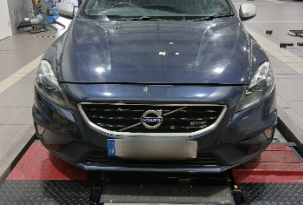
Bain said that automatic number-plate recognition (ANPR) cameras could also be used to check whether a vehicle suspected of benefiting from a “ghost MOT” was really in the vicinity of the garage when its test was supposed to have been conducted.
“When we compare this data with MOT test records, inconsistencies quickly become apparent, particularly in cases where vehicles are being issued pass certificates when they’ve never entered the garage,” he said.
Bain also pointed to DVSA’s six-week “photos of vehicles at MOT” trial, which asked MOT testers at 62 garages across the nation to upload photos of vehicles being tested to the MTS.
He said the trial and DVSA’s tracking capabilities created a “comprehensive picture” of testing activities.
“We expect this technological capability to continue developing, providing even more sophisticated ways to ensure compliance to protect legitimate testers and businesses,” he said.