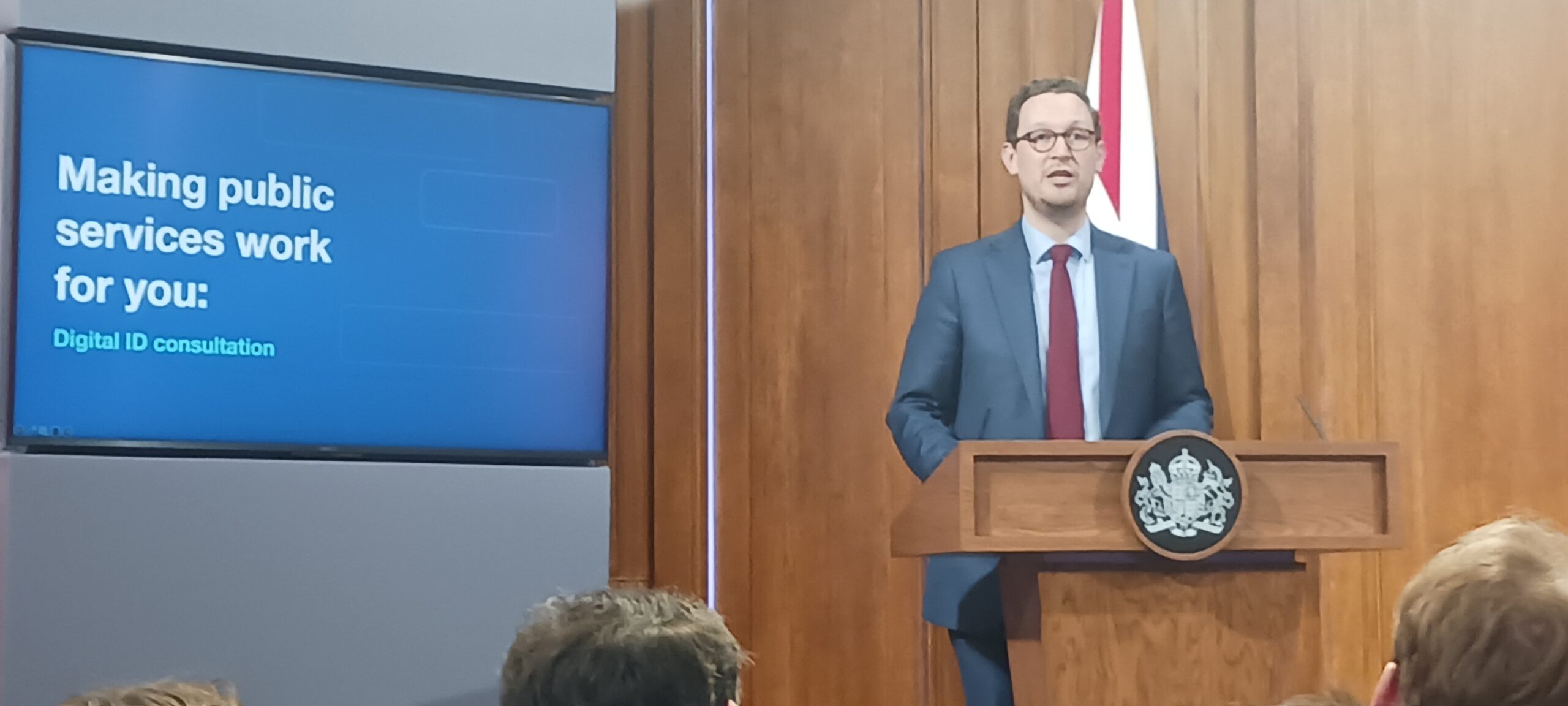

At the local government body’s annual gathering, PublicTechnology and other delegates heard from sector leaders about how digital is creating both opportunities for innovation and new problems to be solved
Published earlier this year, the 2025 edition of Socitm’s annual Public Sector Digital Trends report recognises, as ever, the enormous potential for progress offered to local authorities by technology and data.
But – at a time of huge technological and political upheaval – it does not ignore the immense challenges that can be both caused and solved by digital.
“It is a tough time, with technology outpacing adoption and demands on public services rapidly growing whilst resources, including the availability of digital and IT skills, are constrained,” the report’s introduction says. “Enthusiasm for new technical opportunity will therefore need to be tempered by the capability and capacity to realise the benefits and to moderate digital risks.”
But the existence of the report, and of bodies like Socitm, reflects that, in hardship or success, the local government sector works best when it comes together to learn and to reflect.
The organisation’s yearly President’s Conference each summer offers an opportunity to do so. PublicTechnology went along to Birmingham to hear about the obstacles and opportunities currently facing councils. Here’s what we learned.
Embracing new models of data ownership
“If we want to reimagine local government services – addressing the challenges now, for the near future, and beyond – we need to be honest about and be prepared to tackle the barriers that block real collaboration and limits innovation,” according to Norfolk County Council chief executive Tom McCabe, who gave the event’s opening keynote presentation.
During his address, McCabe noted that the barriers in question can manifest in the area of “data storage and ownership, [where] siloed systems, budget challenges and traditional models and approaches can all hinder progress”.

The Norfolk chief told attendees that authorities could pursue different models for the ownership and access of data – as his council has done when implementing records that bring together information on care delivered to individuals across a range of local NHS entities and community providers.
“One strategy for overcoming such barriers is for us all to consider how we approach data differently,” he said. “Rather than an organisation owning a set of data and another takes a copy of it, we need to consider: can we manage and access it together? This is fundamentally different to what we do now in the sector, but involves parties actually collaborating. Shared care records are a great example of this, with Norfolk County Council having some of the highest recorded usage levels of the system nationally. It uses near-real-time, in-context views of place-based health and care data accessed seamlessly through existing case management systems.”
One Login to rule them all?
The GOV.UK One Login platform is currently being rolled out across central government, with the aim of providing departments – and citizens – with a single and unified means of signing in to access public services.
Emily Sullivan, head of product from the Local Digital unit at the Ministry of Housing, Communities and Local Government, reveals that her department is currently exploring the possibilities of extending the functionality of the sign-in tool to the local authority sector.
MHCLG has recently been working with Socitm and the Local Government Association on discovery exercises examining how One Login could play a role beyond Whitehall – with councils interested in finding out more encouraged to get involved.
Sullivan says that One Login is one of a number of common platforms – some built by the Government Digital Service, others from elsewhere in the sector – that could be applicable for local authorities. But more work is needed to better understand and account for the differences between the discrete areas of the public sector, and how this informs choices regarding technology.
She says: “Central government has very transactional services – the front door to the passport service lets you [solely] into the passport service. But that isn’t the way that local government works: you have one front door, that opens up to 500 or 1,000 different services and different pathways. How do you make sure that’s seamless for a resident, and that we’re really thinking and taking advantage of identity management? But also about other things, and whether or not there are other GDS components, or other best practice that we can explore to try and to take that forward. We want to really think about how… we unlock that: how do we scale some of these components, this best practice, and data standards – how do we make sure that’s embedded across local government, so that we can start building on common platforms and common technology components and move forward in this brave new world?”
Progress and pitfalls in Northern Ireland
Almost a decade and a half on from the creation of GDS, the devolved government in Belfast appears to now be following a similar path to its Westminster counterparts, with the recent creation within the Northern Ireland Civil Service of the Office of AI and Digital.
Professor Helen McCarthy has also been named as the NICS’s chief scientific and technology adviser and, over the coming months, will work the individual departments of Northern Ireland’s government to help develop a plan for the adoption of artificial intelligence tools.
Alison Allen, chief executive of the Northern Ireland Local Government Association, said that the move to create a central Stormont hub to drive digital transformation has met with a mixed response from her organisation’s members.
“Interestingly, the feedback about these constructs is not all positive, and I think it speaks to the tension between getting on with doing things and creating points of coordination at a strategic level,” she said. “Whenever you talk to people who just want to get and do things, they worry that these [entities] will be bureaucratic and slow, and will be barriers to actual transformation and digital growth. That’s a tension that has to be managed.”
But Allen is more uniformly positive about the prospect of government’s artificial intelligence plan.
“We are expecting an AI strategy within the next six months, and I think that is very welcome,” she said. “Because the existing policy within the Northern Ireland Civil Service on AI is, basically: don’t use it. Which I think speaks to the risk appetite.”
The risks of ‘shadow AI’
The long-standing issue of shadow IT – wherein employees of an organisation use technology without the knowledge or oversight of their IT and security colleagues – has a worrying new strand in the age of artificial intelligence, according to Martyn Wallace, chief digital officer of COSLA, the representative organisation for Scottish local authorities.
Wallace tells delegates that, in order to prevent staff following their own AI path, councils need to provide a clear roadmap of their plans for new technology.

“The challenge is that people want to use the best thing out there, and we’ve now got a shadow AI industry happening in councils just now, with people using ChatGPT or using their own AI apps without any governance on it whatsoever, and with a higher range of data breaches – I’ve caught people doing it,” he says. “I’ve even caught some colleagues sending stuff back to Copilot from their M365 personal account to do processing.
Wallace adds: “We need to get this right, and we need to be able to actually tell our staff: what this is, what it does, what we’re going to do about it, and when it’s coming. And not that this is nirvana, and it’s going to save all your problems. Because we’ve got snake-oil salespersons for AI… and I think we have to push back on some [of them].”
Automation is saving 19 trees a year in Cumberland
While new technology brings with it new risks, there was also a welcome reminder of the benefits of digital progress from Cumberland Council. Benefits which can be measured in cost reductions, time saved and satisfied citizens – but also in flowering forests.
Bearing the name of the historic county of Cumberland, the council was established in 2023 and replaced previous borough or city authorities for Carlise, Copeland and Allerdale, as well as taking on some duties from the former Cumbria County Council.
Following its creation, the organisation needed to bring together digital services and IT systems from across the councils it superseded. In doing so, it took the opportunity to purse transformation and, using a low-code platform from software firm Netcall, has built or updated more than 100 digital services.
“Some of those are end-to-end digital services, some of those are small point solutions, and there are also big line-of-business applications totally replacing things like our complaint system, and FOI and EIR management, and developments in HR, highways [and elsewhere],” says Craig Barker, the council’s acting senior manager for digital and customer experience. “There’s been a huge amount of revenue being generated totally automatically by not having to issue invoices, not having to chase people up over the phone, but using automated payment solutions and online payment facilities.”
He adds: “My favourite thing is that we’re saving 19 trees worth of paper annually through process improvement and automation that removes paper from those processes. And that’s figure that’s growing – last year it was12 trees…. Also, through robotic process automation and other automations, 2,000 hours were saved in April… and processes are running about eight times faster.”