
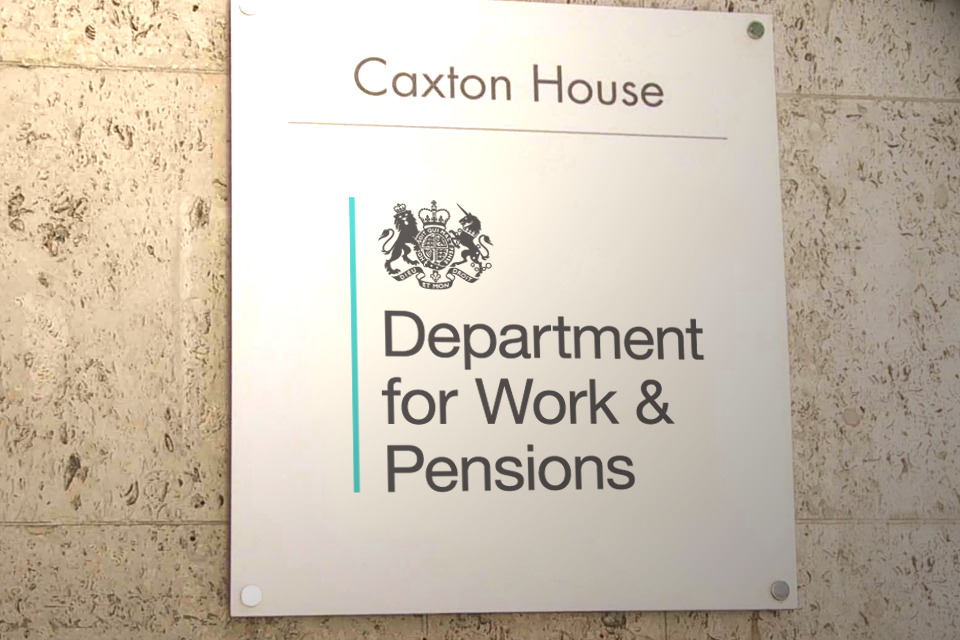
The department’s annual review of the 2025 fiscal year reveals various advancements in its use of technology, although significant future investment is still needed to reduce reliance on ageing infrastructure
The Department for Work and Pensions has revealed that 70% of its caseload currently runs through legacy IT systems – which it plans to take a new “risk-based approach” to identifying and replacing.
The DWP recently published its annual report and accounts for the 12 months to the end of March 2025. The yearly round-up reveals that, while many of the department’s digital services have been migrated to an externally hosted environment, the administration of the UK’s benefits and pensions systems still relies, in large part, on ageing infrastructure.
But, during 2024/25, the DWP made progress, at least, on formulating an approach to help direct its spending on future upgrades.
“To address the impact of our outdated IT services, we developed plans to take a new risk-based approach to identify legacy services – where 70% of current benefit and pension caseload is processed,” the report says. “This forms the focus for future, targeted investment in years ahead. Moving to a stable and secure cloud environment further reduced our reliance on outdated IT, reduced costs and enhanced flexibility, with around 80% of services now hosted in the cloud.”
While it may still rely on some “outdated” services, the annual review adds that the 2025 fiscal year saw an improvement in the amount of time lost to service outages.
“Throughout 2024-25, we delivered secure and available services, recovering efficiently following any loss of online service to provide continuity of service for colleagues and customers,” the report says. “Despite increased demand, service availability remained strong, outperforming our target of less than 0.25% hours lost of total service hours… with an end-of-year loss of 0.13%.”
Related content
- DWP signs £4m deal to support final year of cloud transformation scheme
- DWP signs £5m deal to ‘refresh ageing infrastructure’ in datacentres
- DWP signs new three-year AWS deal for £94m
The uptick in demand for services was both fuelled and supported by new technology, including artificial intelligence tools which were used to find citizens that might require further support.
“We have seen increased demand across our services and have actively managed our resources to respond to this,” the report says. “Following national and local media campaigns, we saw an 81% increase in Pension Credit applications between July 2024 and February 2025 compared to the previous year. As we continued to modernise how we design and deliver our services and grow the channels through which we connect with our customers, we also adopted generative AI in a controlled and considered way. For example, in 2024-25 AI tools identified over 16,000 documents showing potentially at-risk customers. In January 2025, 85% of applicants applied for their State Pension online using our quick and easy Get Your State Pension service.”
Generation game
The deployment of AI technologies is a recurrent theme in the report, which cites examples including the DWP Ask tool used by work coaches, described by the annual report as “our first generative AI application for frontline staff to enable them to better serve their customers through more focused conversations”.
Also implemented in FY25 was Generative AI for Learning, a program intended to “assist with generating training material”.
To support these and future deployments of AI, the department has codified a Responsible AI Framework. Comprised of six principles, the guidance says that the use of technology should always be: explainable; mitigated; controlled; understood; value-led; and governed.
The use of artificial intelligence forms part of wider efforts to embrace tech and data, as part of which “in 2024-25, we defined how a digital-first culture can prioritise the use of technology to solve problems that improve customer experiences and support the shift to digital channels”, according to the DWP report.
“This activity has united Digital Group and the Department under one agreed, future focused mission – looking to technology first in solving our problems to improve services to customers,” the document says. “To enable us to be more innovative, we reviewed wider government service ownership models and co-designed proposals for how we can apply this in DWP, bringing sole accountability for delivery of an end-to-end service model. We have applied this service ownership model to Working Age Services.”
The report adds: “We improved how we operate in Digital Group this year to better support departmental priorities whether through partnering with wider business counterparts, enhancing how demand on the group is received, assessed and managed, or becoming involved in commercial opportunities earlier to determine whether we build internally or buy, and supporting efficiencies with new resourcing and capability models.”