
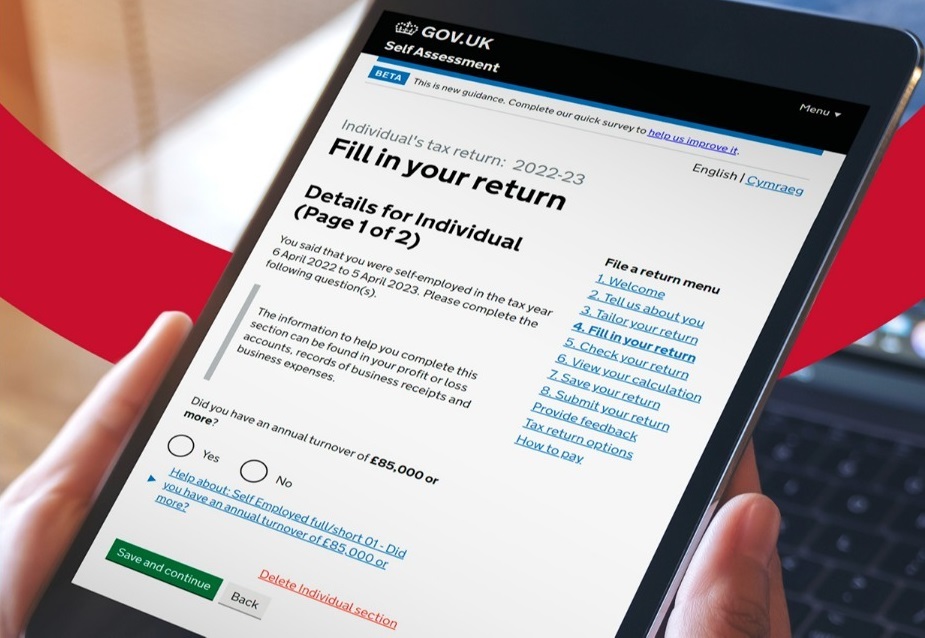
HMRC opens volunteer testing of Making Tax Digital for Income Tax
Almost two years before the digitisation programme expands to cover income tax payments, the department

National Cyber Security Centre hires PwC exec Horne as new CEO
The UK’s cyber intelligence agency has named former Barclays executive – who also spent a

Cabinet Office seeks to improve spend control compliance
After one of its own units recorded a breach of the guidelines, the department is

Eastern police forces explore ‘electronic interventions’ for low-level offenders
Police in Norfolk, Suffolk, Cambridgeshire and Hertfordshire wish to examine the possibility of self-guided online

Whitehall digital pay framework is ‘being revalorised to meet market trends’
Dedicated salary structure for those in key tech roles – which has helped some departments

Ofcom report finds many young children using social media unsupervised
The UK’s new online safety regulator publishes its annual assessment on children’s media use, including

Levelling Up department signs £20m deal for ‘urgent digital requirements’
DLUHC has awarded a contract for specialist external partners to provide the department with ‘multidisciplinary
GDS founder part of crack team brought in to advise Labour on HMRC modernisation
The Labour party has assembled a team of big names – including a former permanent

Home Office begins asking residence permit holders to register for eVisas
Department presses on with implementation of wider plan to eliminate all physical immigration documents with

Campaigners claim new DWP bank-monitoring powers are ‘likely unlawful’
After scores of civil society groups oppose new measures, department claims any suggestions that the

Whitehall CTOs agree ‘principles and guardrails’ for government mobile app strategy to be published next year
Intent to develop a central strategy for government apps was first revealed two years ago

World’s ‘most advanced humanoid robot’ moves to Edinburgh
The National Robotarium of Scotland has acquired an Ameca model, which was developed in Cornwall,

Local government digital engagement varies greatly between senior officials and frontline workers, research finds
Published today, the PublicTechnology Local Government Digital Transformation Report contains exclusive research shining a light

Ofcom tests accuracy of social platforms’ AI classification tools with ‘sensitive material’
New online safety regulator aims to understand the benefits and limitations of automated moderation tools

Glasgow University claims 6G breakthrough
Academics have unveiled a new dynamic metasurface antenna which is claimed to be the first

Government claims info collected by anti-disinformation unit may ‘incidentally include personal data’
The recently renamed National Security Online Information Team has published an official privacy notice, revealing

One Login verified 840,000 users in Q1
Figures reveal that new processed over 350,000 identity checks in January alone, including app and

Peers seek new law to provide stronger protections for citizens’ data
As the Lords debates the Data Protection and Digital Information Bill, members urge government to
